The 8 Best Automated Vulnerability Remediation Tools in 2026

Written by
OpenHands Team
Published on
The 8 Best Automated Vulnerability Remediation Tools in 2026
A single dependency bump used to be an afternoon of work. You bumped the version, ran the tests, opened the pull request, and moved on. Then the same vulnerability turned up in forty repositories at once, each needing its own branch, review, and merge, and the afternoon became a two-week project nobody scheduled.
Finding vulnerabilities stopped being the hard part years ago. The work that piles up now is writing and verifying the fix across every service a vulnerability touches. Some tools route a developer to the fix, some deploy a vendor patch, and some let an artificial intelligence (AI) agent write the change and open a reviewable pull request for a person to approve. This guide covers why manual remediation broke down, the automated-fix workflow, the capabilities that separate these tools, and the eight worth comparing.
What automated vulnerability remediation tools do
Automated vulnerability remediation tools close the gap between finding a flaw and shipping the fix without a person hand-writing every change. Detection tells you what is wrong, then a remediation tool prioritizes the finding, applies or proposes the fix, and confirms it is gone. Most tools own one slice of that loop, and the real test is whether a tool cuts the count of vulnerabilities developers fix by hand.
Why manual remediation broke down
Manual remediation broke because the time to exploit kept shrinking while the work kept multiplying. Four pressures now push the backlog past what any team can patch by hand:
-
Disclosure volume keeps climbing: By security researcher Jerry Gamblin's analysis of Common Vulnerabilities and Exposures (CVE) records, 48,185 CVEs were published in 2025, a 20.6% rise over 2024.
-
Official enrichment narrowed: As of April 15, 2026, the National Vulnerability Database (NVD) prioritizes only CVEs in the Cybersecurity and Infrastructure Security Agency (CISA) Known Exploited Vulnerabilities (KEV) catalog plus federal and critical software, labeling the rest Not Scheduled.
-
One flaw spreads everywhere: A single vulnerability in a common dependency reaches every repository and container that pulls it in. By Sonatype's 2026 State of the Software Supply Chain report, vulnerable Log4j versions still made up about 13% of Log4j downloads in 2025, four years after Log4Shell.
-
Remediation rates are falling: Verizon's 2026 Data Breach Investigations Report found only 26% of KEV vulnerabilities fully remediated across more than 13,000 organizations, down from 38% a year earlier.
When the queue grows faster than people can work it, adding reviewers stops being the answer. Automating the fix side of the loop is the way forward, and the next section walks through it stage by stage.
How the automated remediation workflow works
Automated remediation runs as a loop with four stages, and different tools own different stages well. Detection finds the vulnerability, prioritization ranks it against real risk, patching produces the change, and verification confirms it held.
Detect: continuous scanning and source analysis
Detection combines static and dependency analysis with runtime checks. Static application security testing (SAST) reads source before deployment and can fail a build at a quality gate. Software composition analysis (SCA) inventories every component, including transitive dependencies, against public vulnerability databases. Container and infrastructure-as-code (IaC) scanning cover the rest of the lifecycle.
Prioritize: risk-based scoring beyond raw severity
Prioritization ranks findings by exploitability and business impact rather than Common Vulnerability Scoring System (CVSS) severity alone, since fixing every high and critical is a losing game at scale. The Exploit Prediction Scoring System (EPSS) estimates the probability a CVE gets exploited within 30 days, the KEV catalog flags confirmed exploitation, and reachability analysis asks whether the vulnerable path can run in your deployment. By Pixee's own estimate, those signals cover the 12 to 20% of findings that carry genuine risk.
Patch: generate, apply, and open the fix
Patching produces the change in whatever form the vulnerability needs. A vulnerable dependency gets a version bump, affected software gets a vendor patch, and a code-level flaw gets a source edit opened as a pull request (PR). Version bumps are mechanical, but code-level fixes are where AI agents now write and explain the change in the PR, the outer-loop shift from patching one service by hand to running remediation workflows across the affected services and repositories.
Verify: rescan and confirm the fix
Verification re-runs the relevant scans and tests before merge and, where necessary, after deployment to confirm that the finding is resolved without introducing a regression. A strong loop also reproduces the original exploit case when practical. This is where the human review gate sits, since the agent opens the PR but a person approves changes to sensitive logic.
Capabilities to look for in a remediation tool
Five dimensions separate tools that cut engineering load from tools that add to it, and the same five run through the table and every entry below:
-
Workflow position: Whether the tool detects, orchestrates, patches, or writes the code fix.
-
Fix approach and quality: What change it produces and how many developers actually merge it.
-
Prioritization: Whether it ranks findings with EPSS probability, KEV status, reachability, and business context rather than raw severity.
-
Integration depth: How cleanly it connects to your source control, continuous integration and delivery (CI/CD) pipeline, ticketing, and scanners.
-
Deployment and governance: Whether you get audit logs, role-based access control (RBAC), human review gates, and self-hosted or virtual private cloud (VPC) deployment.
Merge rate is the one to weigh hardest, since a tool that opens fixes developers dismiss adds to the backlog it was meant to shrink.
The 8 best automated vulnerability remediation tools in 2026
The tool that finds a vulnerability is rarely the one best suited to fix it, which is what these eight compete on. The table maps each tool to the same five dimensions, in the same order, so a cell here expands in the matching entry below, and signals and pricing reflect each vendor's published information as of July 2026.
| Tool | Workflow position | Fix approach | Prioritization | Integration depth | Deployment and governance | | --- | --- | --- | --- | --- | --- | | OpenHands | AI agent platform | Agent writes source fixes, opens PRs | Consumes ranked scanner findings | GitHub, Trivy, scanner reports, CI | Local, cloud, self-hosted, plus RBAC and VPC on Enterprise | | Snyk | Scanner plus AI fix | Automatic Fix PRs, Agent Fix | Reachability, exploit maturity, popularity | Source control, editor, CI/CD, Jira | Cloud, self-hosted options | | GitHub Dependabot | Patch (dependency bumps) | Automated version-bump PRs | Severity-based filtering | GitHub-native | GitHub cloud and Enterprise Server | | Pixee | AI fix plus triage | Codemods and AI fixes as PRs | Reachability, exploitability triage | 10-plus scanners, GitHub, GitLab | Cloud SaaS | | Mobb | AI fix (SAST remediation) | Deterministic fix PRs | Relies on connected scanners | Checkmarx, Fortify, SonarQube, Snyk | Cloud SaaS, free tier | | Qualys VMDR | Scanner plus patch orchestration | Policy-based patch deployment | TruRisk scoring | Cloud Agent, ticketing, mixed assets | Cloud, agent-based | | Rapid7 InsightVM | Scanner plus orchestration | Remediation Projects, automation | Active Risk (0 to 1,000) | Jira, ServiceNow, third-party scanners | Cloud, on-prem | | SentinelOne Singularity Vulnerability Management | Scanner plus endpoint remediation | One-click remediation, rollback | SentinelOne Risk Score (EPSS, KEV) | SentinelOne agents, unified console | Agent-based, cloud console |
1. OpenHands
Interactive coding agents can address one repository at a time, but remediating the same vulnerability across an estate requires repeatable workflows that run asynchronously and in parallel. OpenHands is the open-source platform for building and running software engineering agents. For remediation, it turns ranked scanner findings into repeatable fix-and-PR workflows rather than replacing the scanner itself.
Key features:
-
Agent loop with review built in: It reads code, writes a fix, runs tests in a sandboxed runtime, and opens a PR for approval.
-
Vulnerability-fixing workflow: The Fix Vulnerabilities workflow scans with Trivy or ingests a Snyk, Veracode, or Checkmarx report, then launches remediation runs for selected findings and opens pull requests for review.
-
Parallel runs and model choice: It runs fix agents in parallel, stays model-agnostic through LiteLLM, and self-hosts the open-source core.
Pros:
-
The open-source MIT-licensed core gives security teams visibility into how the remediation workflow is implemented, while the resulting code changes, tool activity, and pull request remain available for review before merge.
-
It complements a detection stack you already run rather than replacing it.
Cons:
-
It opens fixes but leans on a separate scanner for full detection, though Trivy covers a basic scan.
-
The Agent Control Plane and org-wide controls are a separate commercial Enterprise tier, not the free core.
Best for: Platform teams feeding ranked findings to an agent that opens fix PRs across a repository estate, especially regulated industries needing self-hosted deployment and audit logs.
2. Snyk
Snyk scans and fixes across open-source dependencies, source code, containers, and infrastructure as code, for teams that want detection and remediation from one vendor. It prices per contributing developer from a free tier through Enterprise quotes, and it was named a Leader in the 2025 Gartner Magic Quadrant for Application Security Testing.
Key features:
-
Automatic Fix pull requests: Snyk opens a fix PR on a new issue and closes it on resolution, across GitHub, GitLab, Bitbucket, and Azure Repos.
-
Agent Fix: Snyk Agent Fix, powered by DeepCode AI, reports 85% fix accuracy across 19-plus languages, a vendor figure.
-
Risk-based prioritization: It ranks findings by package popularity, reachability, and exploit maturity.
Pros:
-
Developer-friendly integrated development environment (IDE), CI/CD, and Jira integration.
-
One vendor covering dependencies, code, containers, and infrastructure as code.
Cons:
-
Per-developer pricing adds up as team size and module count grow, so larger teams should model cost against their repository count.
-
Coverage is bounded by Snyk Code's supported languages, so the oldest or most niche stacks may fall outside automated fix generation.
Best for: Teams wanting detection and fix generation from one vendor, especially those with many repositories but few developers, where per-developer pricing works in their favor.
3. GitHub Dependabot
Already running on millions of repositories, GitHub Dependabot is GitHub's native dependency-update tool, raising pull requests to bump vulnerable or outdated packages with no procurement. It is free for public and private repositories, and its job is dependency-version patch management, not source-code fixes.
Key features:
-
Security and version updates: It raises PRs for vulnerable dependencies, including GitHub Actions and transitive npm packages, and keeps versions current without a CVE.
-
Grouped updates: A July 2025 change consolidated updates across package managers so one pull request can batch several ecosystems.
Pros:
-
Free for public and private repositories, since the per-user cost sometimes cited is GitHub Advanced Security, not Dependabot.
-
A familiar workflow already running everywhere, so adoption needs no training.
Cons:
-
PR noise remains a common complaint, including grouped PRs that close and recreate repeatedly.
-
No understanding of whether an update breaks your repository, since it bumps versions without running your test suite first.
Best for: The baseline for any team on GitHub wanting automated dependency bumps with no procurement, usually paired with a context-aware fix tool for source-code flaws.
4. Pixee
Pixee is an agentic application-security platform that triages scanner findings and generates context-aware code fixes as pull requests. Its pitch is that most automated security fixes get dismissed for lack of context, and it targets that directly, reporting a 76% merge rate on the fixes it opens.
Key features:
-
Triage and remediation: Exploitability analysis cuts false positives, and fixes are built from your project's own classes and patterns.
-
Layered fix methodology: It combines deterministic Codemods, AI-generated fixes, and a Fix Evaluation Agent that scores each fix before the PR opens.
-
Broad scanner coverage: It connects natively to Snyk, Semgrep, CodeQL, Checkmarx, and Veracode among 10-plus integrations, and accepts any scanner that outputs the Static Analysis Results Interchange Format (SARIF).
Pros:
-
High reported merge rate, since context-aware fixes with clear explanations are easier to accept.
-
Layers onto an existing detection stack without replacing it.
Cons:
-
The merge-rate and noise-reduction figures are vendor-reported, with independent reviews scarce.
-
As a triage-and-fix layer, it depends on the scanners you already run, with no published dollar pricing.
Best for: Teams drowning in scanner findings that want aggressive triage plus context-aware fix PRs, especially where developer count is high relative to finding volume.
5. Mobb
Mobb is an AI code remediation layer that turns scanner findings into ready-to-merge pull requests. It leans on deterministic, validated changes rather than free-form generation, and it offers a free plan alongside paid Team tiers.
Key features:
-
Bulk fixes: One action resolves multiple related findings in a single contextual PR, covering 100-plus issue types.
-
Deterministic approach: It applies only safe, validated changes, lowering the odds of introducing a new bug.
-
Scanner integrations: It connects to Checkmarx, Fortify, SonarQube, Snyk, and Semgrep.
Pros:
-
Validated, deterministic fixes reduce the risk of an AI change breaking the build.
-
Bulk remediation clears related findings in one PR, cutting triage time.
Cons:
-
Narrow scope as a fix layer, so it depends on a separate detection stack, and capability claims are vendor-sourced.
-
Paid Team plans cap the number of contributors and connected scanners, so scaling coverage raises cost.
Best for: Teams already running a scanner like Checkmarx or Fortify that want a deterministic fix layer turning findings into merge-ready PRs without changing detection tooling.
6. Qualys VMDR
Qualys VMDR (Vulnerability Management, Detection and Response) consolidates asset discovery, vulnerability assessment, threat prioritization, and patch orchestration into one application on the infrastructure side rather than source code. It covers on-premises, cloud, mobile, and container assets through a lightweight Cloud Agent, virtual scanners, and passive network analysis.
Key features:
-
TruRisk scoring: It quantifies risk from exploit-code maturity, active exploitation, asset criticality, and exposure on a 0-to-1,000 scale.
-
Policy-based patching: Its Patch Management module patches Windows, Linux, Mac, and third-party apps, with a zero-touch option under a set policy.
-
Exploit validation: TruConfirm, part of Qualys Enterprise TruRisk Management, safely runs real-world attack scenarios to validate exploitability before remediation.
Pros:
-
Strong asset discovery and live inventory across a large, mixed estate through the Cloud Agent.
-
Scanning, TruRisk prioritization, and patch deployment in one platform.
Cons:
-
Scan coverage gaps, with users reporting devices the agent misses.
-
Cost is a common concern for smaller teams, and Qualys quotes per asset through sales rather than publishing list pricing as of July 2026.
Best for: Teams managing large infrastructure, endpoint, and cloud estates that want scanning, risk-based prioritization, and patch deployment in one platform.
7. Rapid7 InsightVM
For teams coordinating fixes across multiple owners, Rapid7 InsightVM is a vulnerability scanning and remediation-tracking platform for infrastructure, strong at assigning and tracking remediation work, not writing the code. As of July 2026, Rapid7 no longer publishes InsightVM list pricing, quoting per-asset subscriptions through sales.
Key features:
-
Active Risk scoring: Scored from 0 to 1,000, it blends CVSS with feeds including Metasploit, ExploitDB, and the KEV catalog, replacing the legacy RealRisk strategy retired in January 2026.
-
Remediation Projects: Projects assign and track work across teams with Jira and ServiceNow tickets, updating as new assets appear.
-
Aggregation and automation: The Remediation Hub ingests third-party scanner data, and InsightConnect adds security orchestration, automation, and response (SOAR) plugins.
Pros:
-
Remediation Projects track fixes across owners with Jira and ServiceNow, so work does not fall between teams.
-
Broad reporting and dashboards across a large infrastructure estate.
Cons:
-
Reviewers report weak synchronization between on-premises and cloud environments.
-
Long-running projects can become unmanageable, since closed items cannot be purged, and InsightVM tracks the fix rather than writing the code.
Best for: Teams coordinating infrastructure remediation across many owners, with the Remediation Hub as an aggregation layer for teams already running Qualys or Tenable.
8. SentinelOne Singularity Vulnerability Management
SentinelOne Singularity Vulnerability Management turns existing SentinelOne endpoint agents into vulnerability sensors, so teams already running its endpoint protection get vulnerability management without new infrastructure. It handles assessment, prioritization, and endpoint remediation across macOS, Linux, and Windows.
Key features:
-
Agents as sensors: Existing agents scan continuously and on demand, and network discovery finds unmanaged endpoints and deploys agents from the same workflow.
-
SentinelOne Risk Score: Prioritization draws on EPSS and KEV data to rank vulnerabilities by what attackers actually exploit.
-
One-click remediation: Automated remediation with rollback reverts unauthorized changes during a security event.
Pros:
-
Easy to run for teams already on SentinelOne, with no separate scanner to license.
-
Real-time detection tied to the same console.
Cons:
-
Scanning reaches only SentinelOne-protected endpoints, so an unmanaged device is inventoried but not scanned until an agent lands on it.
-
Standalone pricing is not public, and platform packages run about 229.99 per endpoint per year, Enterprise on request.
Best for: Teams already running its endpoint protection that want one-click endpoint remediation without new agents, though ticketing-driven orchestration is thinner.
How AI agents change CVE remediation
AI agents take over the fix-and-PR half of the loop while detection and triage still come from your scanners, and the shift is parallelism, since agents can write patches asynchronously across affected repositories instead of one branch at a time. In CrowdStrike's own testing environment, pairing large language models (LLMs) with SAST tools in a feedback loop cut the review-to-merge cycle by roughly 90%.
Input quality heavily influences the outcome. An agent given ranked findings and the relevant scanner context can product more targeted fixes, while one handed a vague instruction may inspect the wrong files or miss the issue your scanner identified. In GitHub's own data, the Octoverse 2025 report found critical fixes landing about 30% faster, with average fix time dropping from 37 to 26 days and configuration-defined Dependabot repositories up 137% year over year to 846,000.
Setting human review gates that keep automation safe
Human review gates keep automated remediation from turning into automated risk. A 2023 study of code snippets from GitHub projects built with Copilot and similar assistants found security weaknesses in 29.5% of Python and 24.2% of JavaScript snippets, so agent-written fixes earn the same scrutiny as any generated code.
A few gates do most of the work, split between unattended agent runs and human sign-off:
-
Pull request checks: Mandatory scans run on agent-generated code before merge, enforced by branch protection rules.
-
Confidence-based routing: Confidence can help prioritize review, but automatic merge should be limited to narrowly defined, reversible changes that pass required testing, policy, and security checks.
-
Risk-tiered review: Authentication, encryption, and payment paths stay behind mandatory human review, whatever the score.
-
Traceability: Each automated action ties back to an approved rule and a logged run, so an auditor can reconstruct what changed.
The agent starts on mechanical fixes with a human approving each PR, then takes on more as trust builds, though review capacity, CI reliability, and security constraints still bind. For regulated teams the scoped permissions and audit logs in the OpenHands Agent Control Plane, part of its Enterprise tier, supply that record.
Where OpenHands fits in automated remediation
OpenHands runs the fix-and-PR side of remediation as an open platform, turning ranked findings from your scanners into reviewable pull requests across the repositories a vulnerability touches. The Fix Vulnerabilities workflow scans a repository or ingests a scanner report, runs an agent per finding, and opens PRs for review. Automations repeat that loop across many repositories on a schedule, while the open source core and workflow activity give teams more visibility into how remediation runs are executed and what changes they produce.
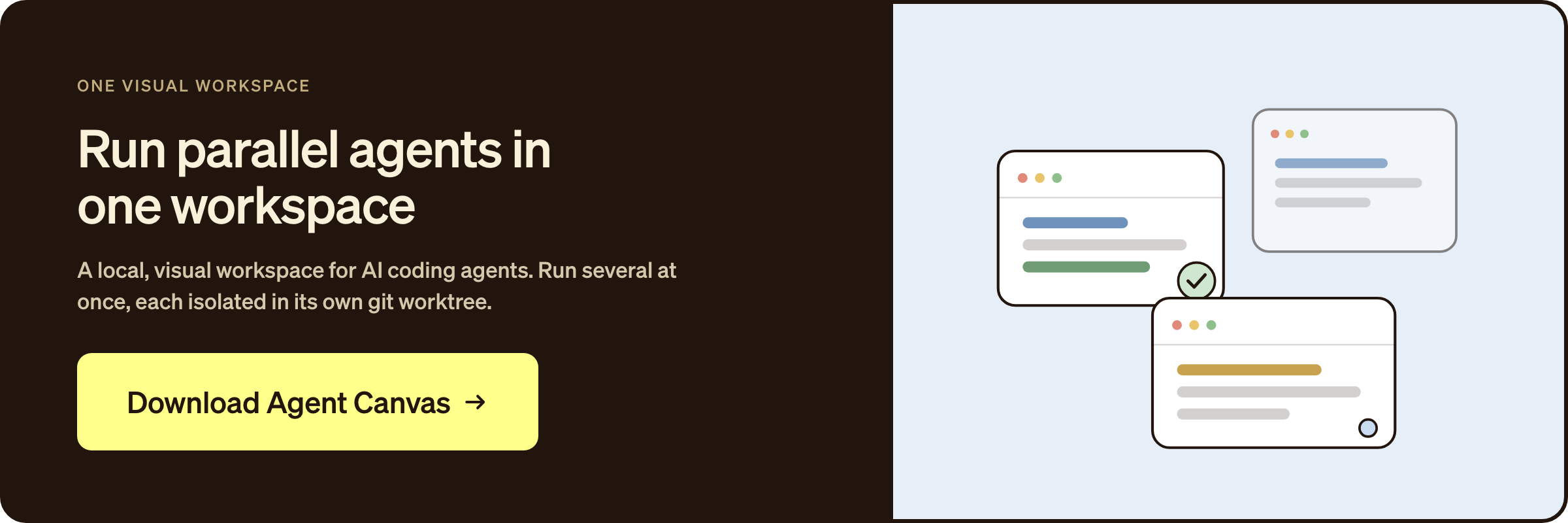
OpenHands is the platform layer around the coding agents developers already run. Agent Canvas connects to external ACP-compatible agents such as Claude Code, OpenAI Codex, and Gemini CLI through the Agent Client Protocol (ACP), where each agent keeps its own model, tools, and execution while Agent Canvas adds scheduling, parallel runs, and org-wide visibility. For teams under governance, OpenHands Enterprise adds a central policy layer over which repositories, secrets, and tools an agent may reach, plus RBAC, audit logs tied to the user and workflow behind each run, budgets and cost attribution, and self-hosted VPC deployment that keeps the runtime under your control.
Making automated remediation your default response to CVEs
Scanners find, orchestrators route, patch tools deploy, and agents write the code, so a working setup pairs a strong detection and prioritization layer with a fix generator that opens reviewable PRs, then puts a human review gate before merge. Merge rate, not scan volume, tells you whether the automation is helping. Start where the manual work is heaviest, turning on Dependabot for the rote dependency layer if you live on GitHub and adding a context-aware fix tool for the flaws outside its scope.
Start with one ranked scanner finding and use OpenHands to turn it into a tested, reviewable pull request. Then expand the same workflow across repositories through scheduled or event-driven automations.
OpenHands adds the automation and governance needed to move from individual fixes to repeatable remediation workflows across a repository estate.
Frequently asked questions about automated vulnerability remediation tools
What is the difference between vulnerability scanning and remediation tools?
Scanning discovers and scores vulnerabilities and stops at a finding list. Remediation tools go further, prioritizing those findings and then applying a patch, generating a fix, or opening a source-code change that closes the gap. Most teams run both, since a scanner tells you what is wrong and a remediation tool does something about it.
How do you automate vulnerability remediation?
Automating remediation connects four stages into a loop, detection, prioritization, patch generation, and verification. Scanners feed ranked findings to a fix layer, which opens a pull request, and a rescan confirms the vulnerability is gone. Reliability depends on feeding the fix tool ranked findings, not a vague instruction, and OpenHands automations can run that loop on a schedule across many repositories.
Can AI agents remediate CVEs without human approval?
They can, though human review is the safer default for most changes. Fully automated remediation fits only narrow, low-risk cases where recovery is cheap. High-impact code like authentication, encryption, and payment logic should stay behind a required review, with the agent opening a reviewable PR instead of merging on its own.
What features matter most in an automated vulnerability remediation tool?
The features to weigh most are workflow position, fix quality by merge rate, prioritization using EPSS and KEV, integration depth, and governance controls. Merge rate is the sharpest signal, since fixes developers dismiss add work instead of removing it. Deployment control counts most in regulated settings, and you can compare adoption options from there.
About OpenHands
OpenHands is the open-source platform for building and running AI coding agents, with the interface, automations, and control layer needed to go from a single local agent to a system running across an entire organization. The mission is to make agent-based software development accessible, transparent, and controllable by default. That starts in the open. The core framework is open source, giving developers and platform teams full visibility into how agents execute work and interact with their systems. The project has over 80,000 GitHub stars, over 9 million downloads, and contributions from hundreds of developers. OpenHands is used by engineers at large enterprises and fast-growing startups to build, run, and scale AI coding agents across real software engineering workflows. The long-term vision is to become the full stack AI coding agent platform for software engineering. Not just helping developers write code, but running meaningful parts of the software lifecycle.


Get useful insights in our blog
Insights and updates from the OpenHands team
Sign up for our newsletter for updates, events, and community insights.
OpenHands is the foundation for secure, transparent, model-agnostic coding agents - empowering every software team to build faster with full control.



